What happens when a bottle is accepted?
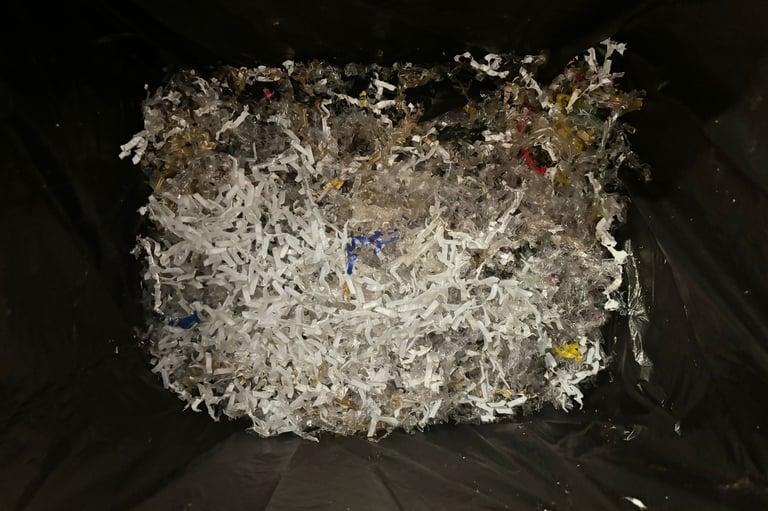
The type of plastic is recognized by reading the barcode on the product, so the label must stay on. The shredders process bottles including the label, caps or pumps of shampoo bottles if the consumer inserts it with these add-ons.
This means that even single-type plastic flakes will still be polluted, either by labels or other materials such as caps or metal from springcaps, or by rest product contamination from sticky content. This pollution needs to be separated during recycling. If a device accepts multiple types of plastics they are mixed in the collection container and need to be sorted anyway.
Types of plastic
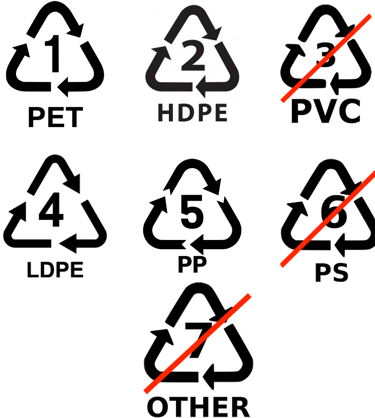
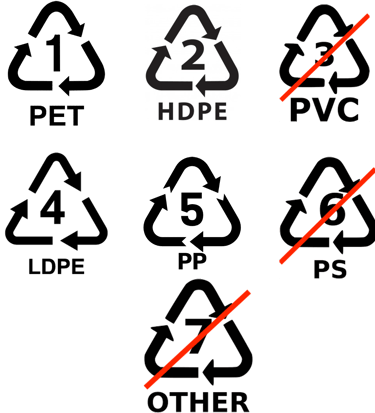
The most common plastics that are recycled are PET (Symbol 1: drink bottles), HDPE Symbol 2: (e.g. shampoo bottles, containers for cold storage), LDPE (Symbol 4: containers that can be heated up), and PP (Symbol 5: some containers, bottle caps, container lids).
The software on our devices can be programmed to accept one single type of plastic or multiple types of plastics (e.g. PET, HDPE, LDPE and/or PP).
IMPORTANT
Before considering our solution;
Verify which sorting technology your recycler uses and discuss our solution with them first before purchasing our solution
Ensure collection and direct transportation to the recycling facility is arranged.
Without these two conditions it is not possible to create a 'closed loop' and the collected plastic may still end up in the landfill.
Sorting
Shredded pieces of plastic (flakes) can't be separated by recylers that use Near Infra Red (NIR) spectroscopy. NIR uses light to identify the plastic types and that only works if it penetrates through a plastic object such as a full bottle. NIR technology is very expensive and is only used by larger facilities in developed countries.
Therefore, shredded plastic flakes can only be recycled with the following sorting methodologies:
Sink/float separation: The flakes are flushed through a tank filled with salt water ('brine'). The plastic types are separated due to their diffent density and weight in brine. This is the most commonly used sorting technology - also in development countries - because it is not expensive.
Chemical recycling: Chemical recycling breaks down plastic waste into its fundamental components (oil, gas and hard carbon). Unlike traditional mechanical recycling, which involves melting and reshaping plastics, chemical recycling decomposes them to their original building blocks. This allows for reprocessing mixed or contaminated plastics without cleaning or sorting. Chemical recycling plants are expensive and require a lot of space, so they are only present in developed countries.
Get in touch
Contact us for more information or to request a quote
Shrett Limited
© 2026. All rights reserved.